Sunday, 01/18/2026
📋 Tasks
Add students to AWS LMS.#cld110 #cld120 #doneSend welcome email.#cld110 #cld120 #donePick up Laundry.#doneAdd due dates to Canvas.#cld110 #cld120 #doneChange "Get to Know Your Classmates" to 25 pts.#cld120 #done
⭐ Projects
Canvas Certified Power User
📋 Tasks
Create a Module plan.#done
Monday, 01/19/2026
🎉 Martin Luther King Jr. Day (Colleges Closed)
⏰ Meetings
08:00 🏋️ Workout with Kassidy
📋 Tasks
Put class alarms on phone.#cis126rh #cis238rh #cld120 #doneUpdate Neocities with latest syllabi.#doneModule 15 lacks content.#cis126rh #doneModule 16 lacks content.#cis126rh #doneModule 17 lacks content.#cis126rh #doneModule 18 lacks content.#cis126rh #doneConvert Guided Exercises to assignments so they can be marked done.#cis126rh #doneConvert Guided Exercises to assignments so they can be marked done.#cis238rh #done
⭐ Projects
Canvas Certified Power User
📋 Tasks
Checking in—How did it go?#done
Tuesday, 01/20/2026
⏳ CLD110 (25865)
⏰ Meetings
- 10:00 Office Hours
- 12:00 CIS126RH (26072)
📋 Tasks
Add Greg Zegan to the AWS LMS for the up coming CLD120 class.#CLD120 #doneCheck CVS for refills & package.#doneCheck this week's slides.#cis238rh #cis238rh #doneProofread.#doneSubmit Office Hours.#done
Submit syllabi.#donePrint Attendance.#cis126rh #doneCheck Canvas for accuracy.#cis126rh #cld110 #doneUpdate faculty calendar.#doneSet the Zoom password to the section number.#cis126rh #doneSet the Zoom password to the section number.#cis238rh #doneRed Hat SSO Account Quiz has different point values.#cis126rh #cis238rh #donePrint Attendance.#cis126rh #done
📝 Notes
- 💡 Would AWS Certified AI Practitioner work as a boot camp? #email #idea
- 🇩🇪 The changing face of "du" #german
CIS126RH (26072)
- Bookmark RHALP.
- RHALP lab environment
- Updated curriculum
- Differing lab point values.
- AI Companion
- Attendance policy
- Can students get notifications by SMS?
- Office Hours (appointment)
- Tutor (Suyoung Park)
- BA 1E is usually cool even in the summer so you might want bring a sweater or light jacket.
- Preview next class.
🏫 Spring 2026 Syllabus and Office Hours - New Processes!
Distribution of Course Syllabus
Submission Deadlines
Classes already in session
Please email your syllabus to the CIS Office DL (cisoffice@mesacc.edu) within 48 hours of the class start date. If a syllabus is not received within this time frame, the faculty member will be considered out of compliance and may receive a written warning from the Department Chair.
Classes that have not yet started
Please email syllabi to us as soon as your class starts. If you’d like to send them in early, we’ll gladly accept them!
Office staff will send a reminder 24 hours after a class begins if a syllabus has not yet been received. If syllabi remain outstanding past the deadline, additional reminder emails will be sent—copying Department Chair Dr. Chris Held—until they are received. As noted above, failure to submit within 48 hours may result in a written warning.
👉 Please note that if a syllabus is submitted without the section number listed on the document, office staff will add it at the time of processing.
If you are using the same syllabus for two or more sections, please let us know if this is not already indicated on the syllabus. Thank you for your understanding.
Simple Syllabus Users
If you use Simple Syllabus, you do not need to submit your syllabus separately, as we have access to the repository. For those who have not yet tried it, Simple Syllabus is a great tool that simplifies syllabus creation and filing. A CTL guide is included for your reference, and we strongly encourage you to explore it.
Office/Lab Hours Submission
Residential Faculty
- Email your office hours to the DL list as soon as possible.
- Update your contact page with your office hours by logging into the intranet, selecting “My Contact Information” in the upper left-hand corner, and scrolling down until you reach the “Office Hours” section. Don’t forget to scroll to the bottom to save changes!
Adjunct Faculty
Please designate a specific time for a "lab/office hour." This should be a 50 minute session for each week you are teaching and should match the modality of your course. You may use Zoom, GoogleMeet, WebEx or Cranium Cafe. Even if you are a 14 or 2nd 8 week instructor, please email the office DL at cisoffice@mesacc.edu with your lab hour schedule by the end of the first week of classes (Friday, January 23rd); it will be published on the MUL website for students to find tutoring help.
CLD110 (25865)
Dear Students,
Welcome to CLD110 AWS Cloud Foundations, section 25865. This accelerated, three-credit, Online course does not have scheduled meeting times.
What to do this Week
- Respond to the AWS welcome email.
- Know where learning happens: All videos, labs, and quizzes are delivered in AWS Canvas (separate from MCC Canvas). I will manually update grades in MCC Canvas weekly; always check AWS Canvas for your most current scores.
- Complete all required items in Module 0 and Module 1.
- You must complete all required items in each module before moving on to the next module.
- Activate your free AWS Skill Builder Offer.
Important Dates
Refund deadline: 26 January 2026
Withdrawal (no instructor permission): 10 February 2026
Time Expectations
This is a fast-paced course. Plan at least 3 hours per week on readings and labs.
Materials and Costs
All required instructional materials are provided online by Amazon Web Services at no cost. An optional resource is AWS Skill Builder for extra practice.
Grading and Key Requirement
Quizzes and labs (in AWS Canvas) are graded. The Course Assessment serves as the final; a 70% or higher is required to earn the AWS badge of completion.
Getting Help
I’m here to support your success. You may contact me via the Canvas Inbox.
I look forward to working with you this term and helping you build a solid foundation in cloud computing.
Sincerely,
Dennis Kibbe
Wednesday, 01/21/2026
💰 SSA Paycheck
⏰ Meetings
- 08:00 🏋️ Workout with Kassidy
- 10:00 Office Hours
- 12:00 CIS238RH (30361)
17:45 CLD120 (26372)
📋 Tasks
Pay Barclay $500.#money #donePay CapitalOne $500.#money #doneSubmit syllabus.#doneDropout Detective - No students should be in the red.#cis126rh #cis238rh #cld110 #cld120 #donePrint Attendance.#cis238rh #done
📝 Notes
- 🪦 Chas Thums passed away last night.
CIS238RH (30361)
- Preview next class.
Thursday, 01/22/2026
💳 Barclay MasterCard due!
🖋 Shop due!
⏰ Meetings
- 10:00 Office Hours
- 12:00 CIS126RH (26072)
- 16:00 Office Hours
- 18:00 CLD120 (25866)
📋 Tasks
Call these students about attendance.#cis126rh #doneDo I need to adjust due dates for Spring Break?#cld120 #donePrint Attendance.#cis126rh #doneCall Dr. Worischeck.#phone #doneWho wasn't in class last night?#cld120 #done
📝 Notes
- 👉 Measles is on the rise. Should I cancel Pasadena trip?
- Davos 2026: Special address by Mark Carney, Prime Minister of Canada
CIS126RH (26072
- Red Hat Interactive labs are in Module 2.
- Access the Command Line Lab is broken. I gave everyone 10 points. Demo commands instead.
- Preview next class.
CLD120 (25866)
Hello Students,
I hope this message finds you well and excited for the upcoming academic term. It is my pleasure to welcome each one of you to CIS120 Amazon Web Services Cloud Architect Associate for the Spring 2026 semester.
Course Overview
Over the course of the next 16 weeks we will dive deep into the world of AWS services using a real world business model. Our journey will involve instructional videos from AWS, hands-on labs, and Knowledge Checks (quizzes) designed to help prepare you to take the AWS Certified Solutions Architect - Associate exam and enhance your understanding of how cloud computing can serve a real business need.
Getting Started
- Course Materials: The AWS Academy provides all study material and access to the AWS Management Console to you at no charge.
- Online Platform: We will be using two different Canvas instances (MCC and AWS) for all our course materials, assignments, and announcements. Look for an email from AWS inviting you to log into their Canvas LMS.
- First Class: Our first meeting will be on Thursday, 22 January at 6:00 p.m. via Zoom.
- Questions: If you have any questions please use the Inbox in Canvas to message me.
Important Dates
- Withdrawal with refund: 28 January 2026
- Withdrawal without Instructor permission: 11 March 2026
Open Door Policy
Your success and well-being are paramount. Should you have any questions, concerns, or just wish to discuss the material further, my office hours are posted on my contact page. Alternatively, feel free to message me through Canvas to set up a meeting outside of these times.
A Few Parting Words
This class is not just about grades or fulfilling credit requirements; it's an opportunity to explore, learn, and grow in cloud computing. Embrace the challenges, engage with your peers, and never hesitate to ask questions. Together, we will make this a memorable and enriching experience!
Looking forward to seeing you all soon. Here's to a fruitful and exciting semester!
Warm regards,
Dennis Kibbe
Friday, 01/23/2026
📧 Kolab Now due!
💰 MCC Paycheck
⏰ Meetings
- 08:00 Teaching and Learning Club
- 12:00 IT/Cyber Industry Sector Collaborator Meeting
- 14:00 PLO Assessment
- 19:00 Piano Community Concert
📋 Tasks
Update syllbi with new lab example screenshot.#cis126rh #cis238rh #done
📝 Notes
STOP Cooking Rice with Just Water
🍠 Baked Yams
To bake yams in a Wonder Oven, preheat it to 400°F, wash and peel the yams, cut them into pieces, and toss with olive oil and seasonings. Place them in the oven and bake for about 45-60 minutes until tender.
PLO Assessment
- Review PLOs and pick an assignment that matches.
🖥️ How to Increase the Screen Resolution on the GNOME Desktop
This will take advantage of higher resolution monitors so you have more working room on the desktop.
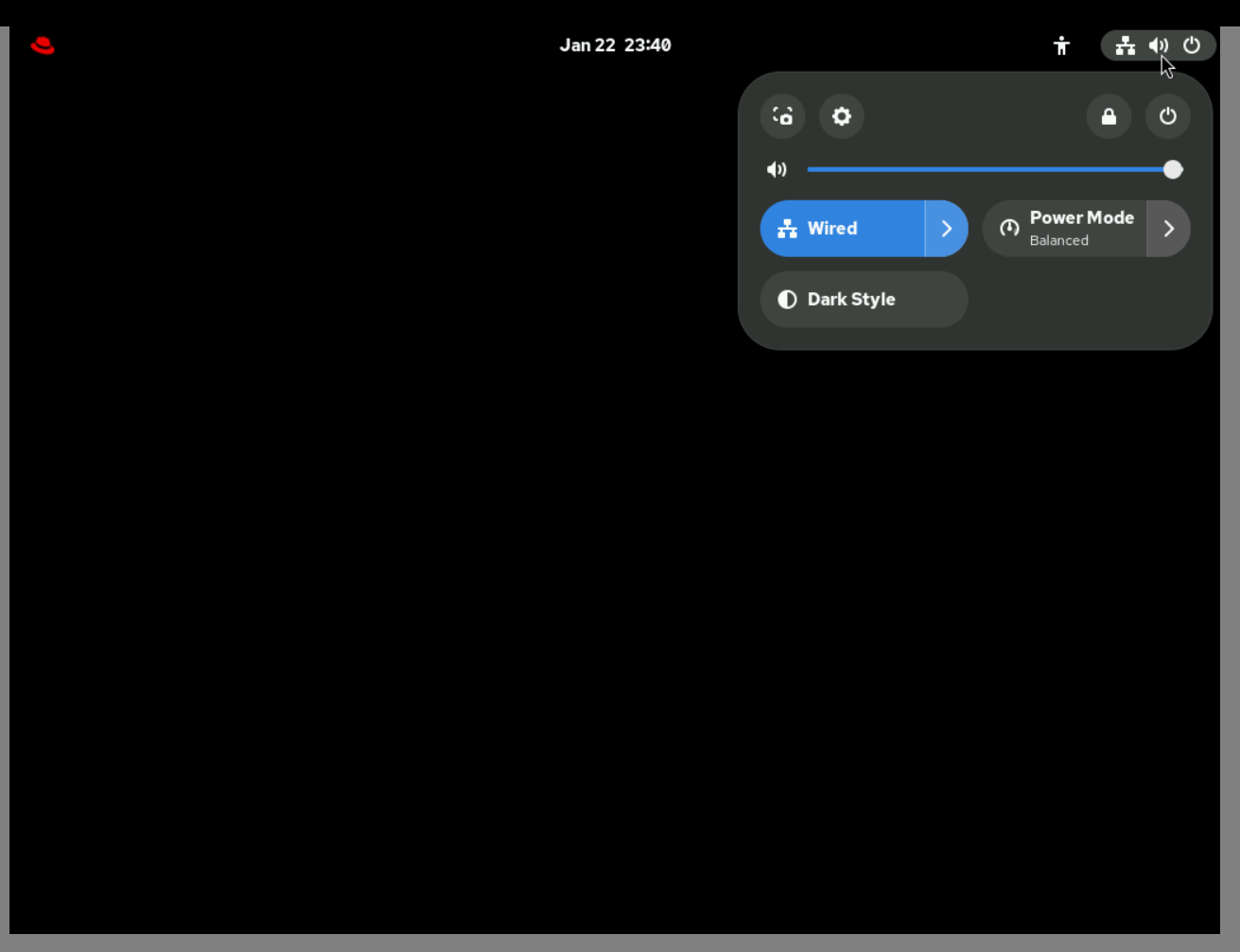
Open the system tray on the right side of the top panel on the GNOME desktop and click on the gear icon to bring up system settings.
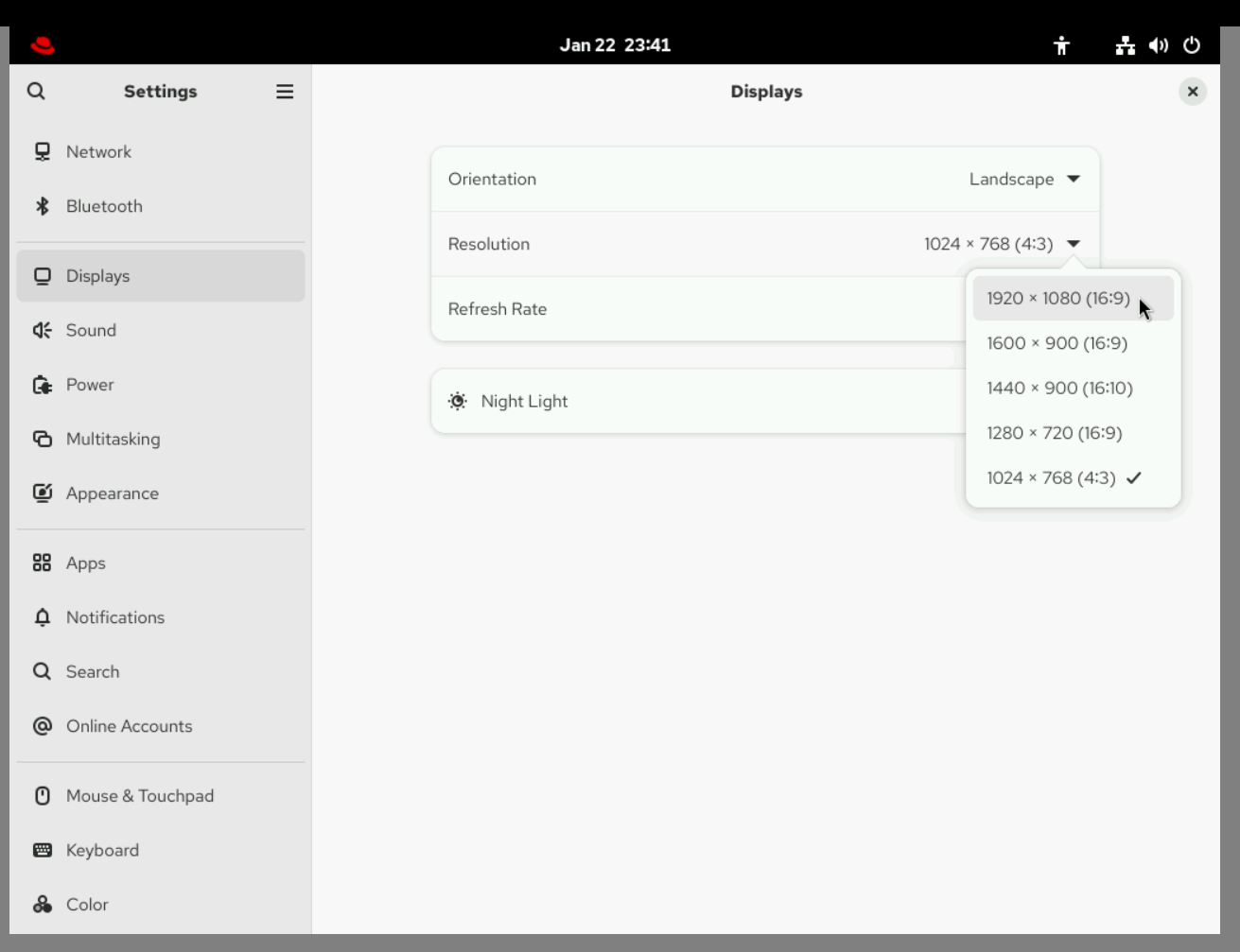
Select the displays settings and set the desired resolution.
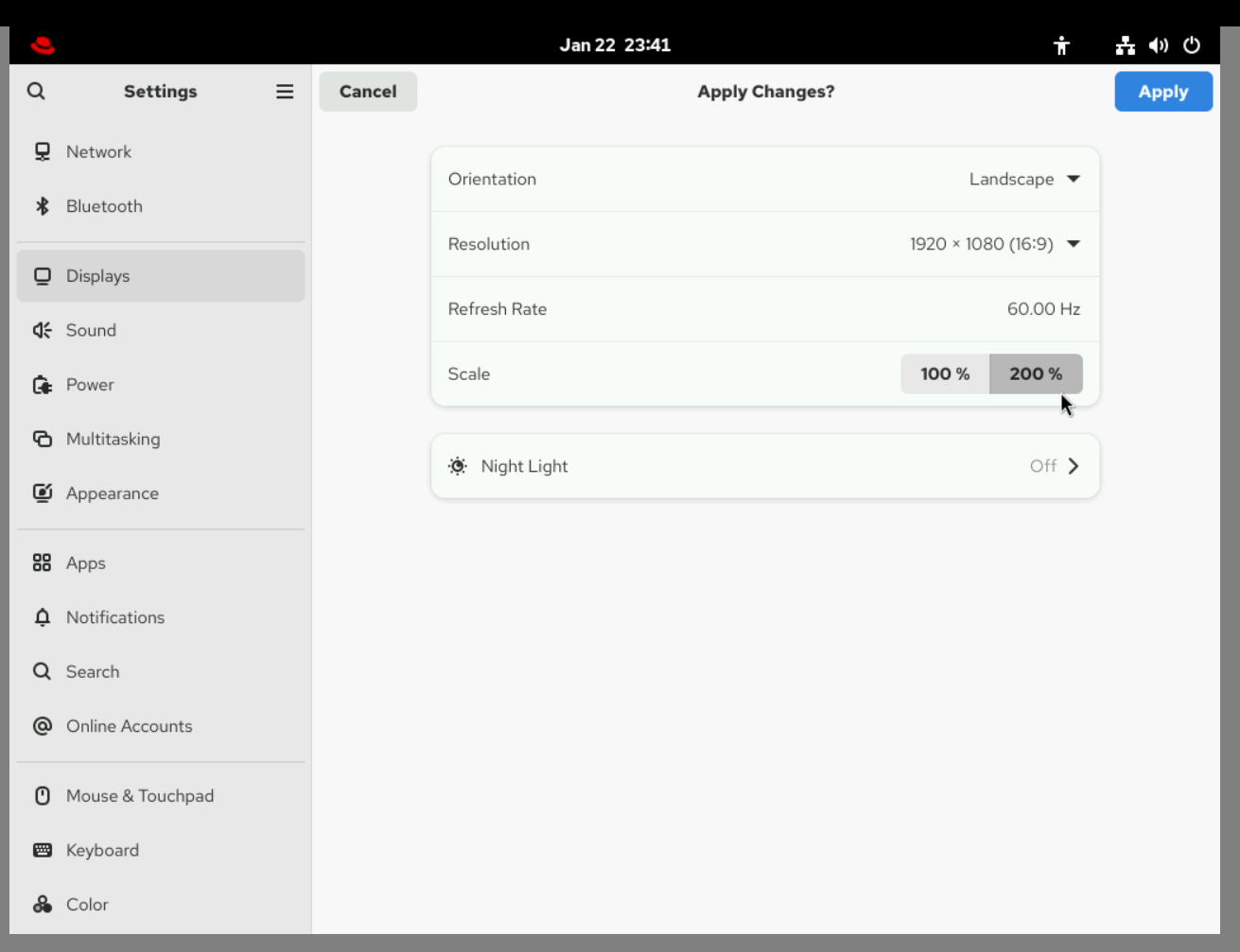
You can also set the scale to 200% for larger text.
Saturday, 01/24/2026
⚡ SRP due!
🌐 Cox Communications due!
⏰ Meetings
- 07:30 ChatMCC
- 12:00 🎙️ Georgio Cocchiarella
- 14:00 Brent Beath
📋 Tasks
- 😥
Order sea birds for Wolfgang.#cancelled Ask Bruce to sub for me 4 Feb.#email #done
📝 Notes
💸 Proposed Budget Cuts to Postsecondary Education Will Devastate Attainment
Governor Hobb’s FY 2027 proposed budget sends a deeply concerning signal about the state’s ability to invest in postsecondary education and training. The potential reductions in funding for programs that are already working are alarming. To be clear and fair, the state of the state’s finances is the result of over two decades of short-sighted decision making on the part of past and current Legislatures and Governors that has led us to a place where cuts like this are necessary.
That said, cuts like this reflect a lack of commitment from our elected officials, who continue to treat postsecondary attainment as optional rather than essential. Postsecondary education and training are crucial for not only an individual's earning potential, but the state’s overall economic health. Disregard for adequate education funding comes at elected officials’ peril as our polling is clear—Arizona voters want stronger investments in education and workforce pathways, not retreat.
The numbers tell a concerning story. Proposed postsecondary cuts include
- Arizona Promise Program from $54 million to $25 million
- Arizona Teacher’s Academy from $24 million to $17.5 million
- Community College Promise Program from $3 million to just $830,000
These proposed cuts will directly reduce access, slow completion, and shrink the pipeline of educators and skilled workers our state desperately needs. This sends a clear message to current and prospective Arizona employers that if you want high-skill workers, you will likely need to find at least some of them outside of Arizona. The programs mentioned above have proven they can lower costs for students, increase credential attainment, and strengthen Arizona’s workforce from within. Doing the minimum of maintaining funding would preserve momentum; expanding it could dramatically accelerate progress toward closing attainment gaps and meeting workforce needs, helping the state reach the Achieve60AZ goal. Instead, this proposed budget asks students, educators, and communities to do more with far less.
Years from now, Arizona may look back at this budget proposal and legislative session wondering why we failed to act when the stakes were so clear. We can still choose a different path—one that invests in the education system capable of producing the homegrown workforce our economy depends on to advance the quality of life for all Arizonans. Earlier we said inaction comes at elected officials’ peril because our polling clearly shows voters want action but the problems do not stop there. Potential cuts like these place the collective future of the state at risk because of the impact on our future economy, including the business community, the non-profit sector and the education community.
Take Action: Contact your state elected officials and urge them to fund postsecondary education programs that are proven to work in the final budget later this spring.
Contact Your Arizona Elected Officials
The Governor’s Proposed FY 2027 Budget – What you need to know